Blog Summary
Choosing shipping container insulation isn’t just about cost—it’s about performance, space, and flexibility. Spray foam offers high performance but low adaptability. Foam board and mineral wool reduce costs but sacrifice space. Continuous EPS panel systems from InSoFast deliver the best balance of thermal efficiency, usable space, and long-term value.
Shipping containers have quickly evolved from simple cargo shells into high-value building platforms used for homes, offices, classrooms, studios, and modular commercial spaces. Their strength and modularity make them appealing—but their biggest weakness is hidden in plain sight: steel conducts heat extremely efficiently.
Without proper insulation, containers become extreme environments—overheating in summer, freezing in winter, and developing condensation issues that lead to corrosion, mold, and long-term durability concerns.
That’s why insulation choice is not just a technical detail—it defines whether a container build succeeds or fails.
In today’s market, five main insulation strategies dominate container conversions. While all are used in practice, their performance, usability, and long-term value vary significantly.
Closed-Cell Spray Foam Insulation (Most Common Professional Solution)
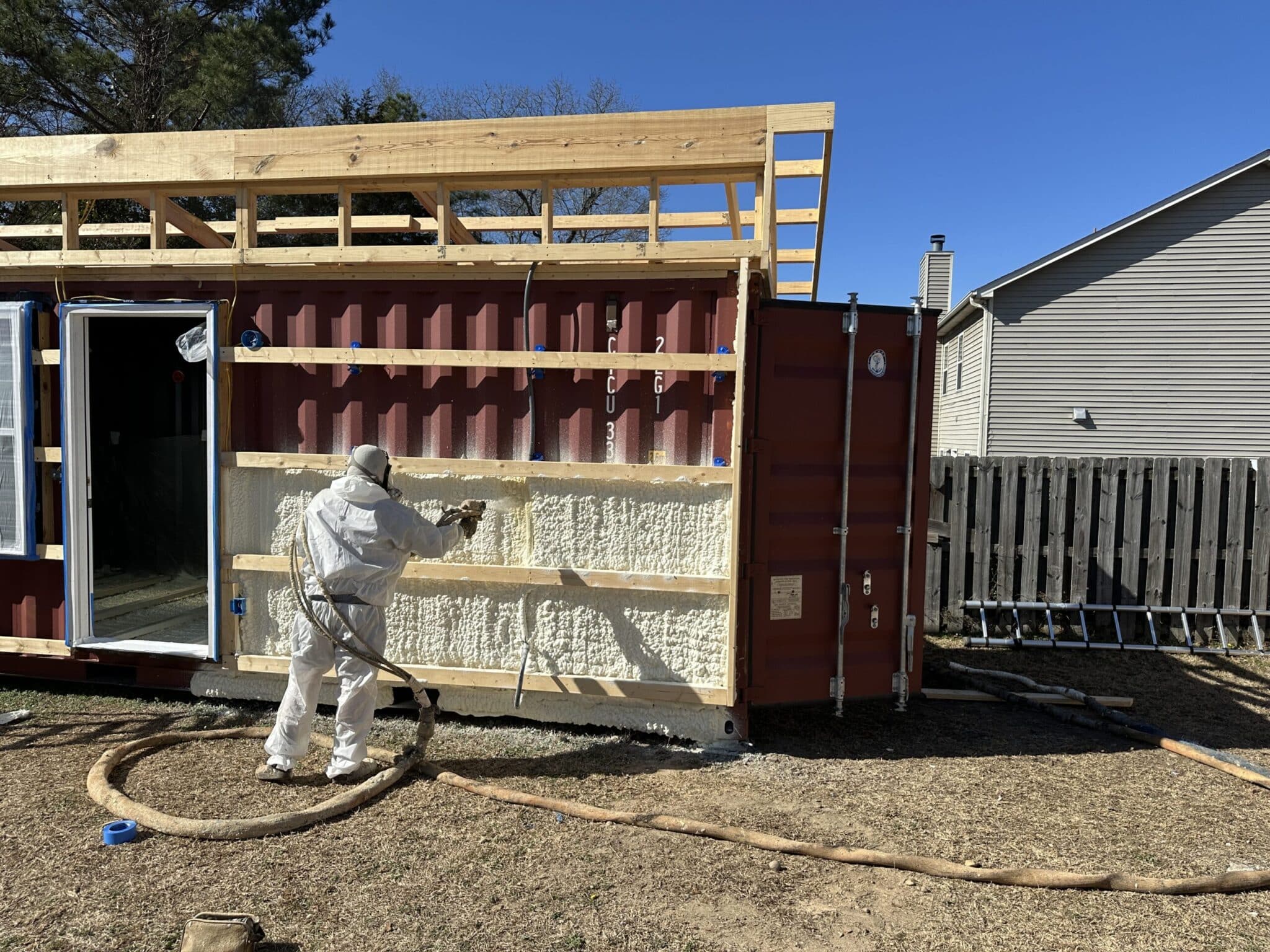
Closed-cell spray polyurethane foam (SPF) is often the first solution contractors recommend for shipping container insulation.
Install Process:
- Surface prep (clean steel walls)
- Spray application using specialized equipment
- Foam expands to fill corrugations
- Trim excess and finish interior
Why it’s used:
- High R-value per inch
- Air seals and insulates in one step
- Conforms to corrugated steel walls
- Reduces vapor movement when properly applied
Spray foam performs well in harsh environments and is widely used in both residential and industrial container conversions. However, its strengths come with important limitations—especially in adaptive or high-value builds.
Key limitations:
- Requires professional installation and specialized equipment
- Higher upfront cost compared to board systems
- Difficult to modify after installation (wiring, plumbing, repairs)
- Can lock in design decisions early in the build
Spray foam is often chosen for speed and familiarity, but it can reduce long-term flexibility in buildings meant to evolve over time.
Rigid Foam Board + Framing Systems (Traditional Construction Approach)
Rigid insulation boards—such as EPS, XPS, or polyiso—combined with wood or steel framing represent the most familiar construction method.
Install Process:
- Install wood or metal studs
- Cut foam boards to fit
- Attach with adhesive or fasteners
- Seal seams + add vapor barrier
- Finish with drywall or paneling
Why it’s used:
- Lower material cost
- Widely available
- Familiar to most contractors and inspectors
- Straightforward installation in conventional framing systems
This method mirrors standard stick-frame construction, which makes it easy to approve and build. However, shipping containers are not traditional wall assemblies.
Key limitations:
- Requires full stud framing, reducing interior space
- Creates thermal bridging through studs or metal framing
- Adds labor time and complexity
- Less efficient in curved or corrugated steel interiors
While cost-effective upfront, framed systems often sacrifice both performance and usable interior square footage—two critical factors in container design.
Mineral Wool + Stud Framing
Best for fire resistance and soundproofing
Install Process:
- Frame walls with wood or steel studs
- Insert mineral wool batts between studs
- Add vapor control layer
- Finish with interior wall system
Key Advantages:
- Fire-resistant (non-combustible)
- Excellent soundproofing
- Moisture resistant (repels water)
Why it’s used:
Mineral wool (rockwool) is common in commercial and code-driven projects.
Downsides:
- Requires full framing
- Lower R-value per inch (~R-3 to R-4)
- More labor and thicker walls
- Thermal bridging remains
Continuous EPS Insulation Panels (InSoFast System)
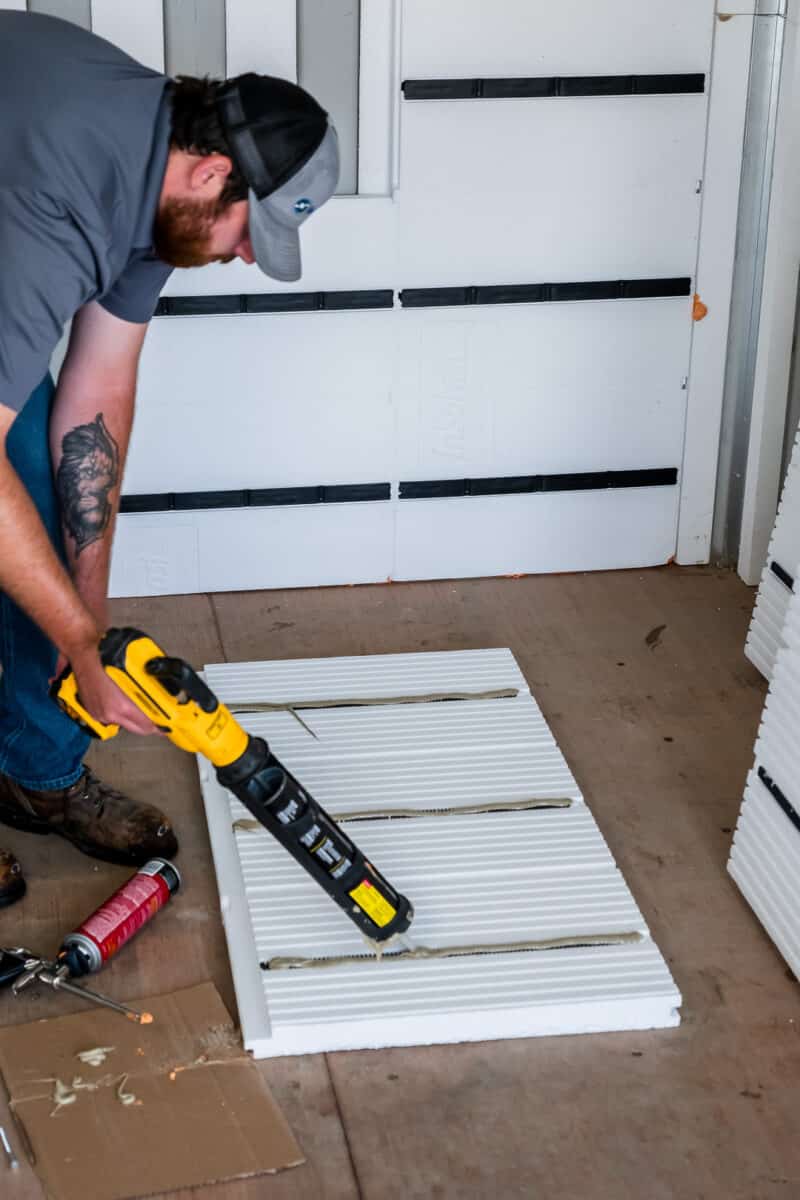
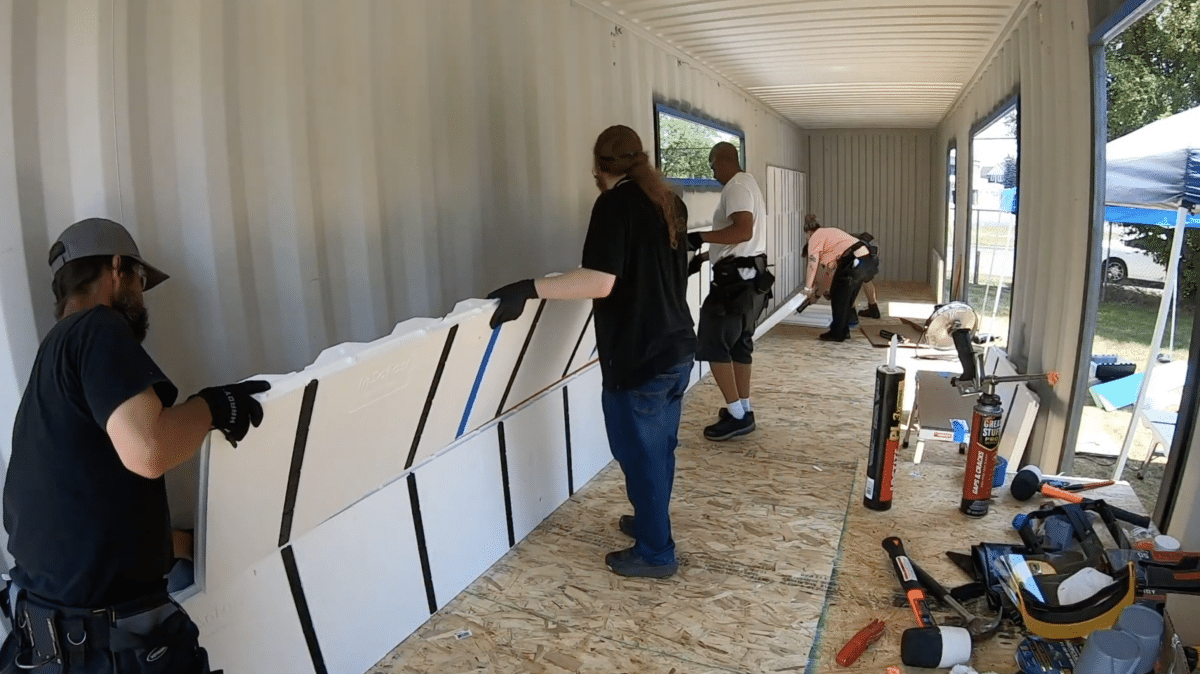
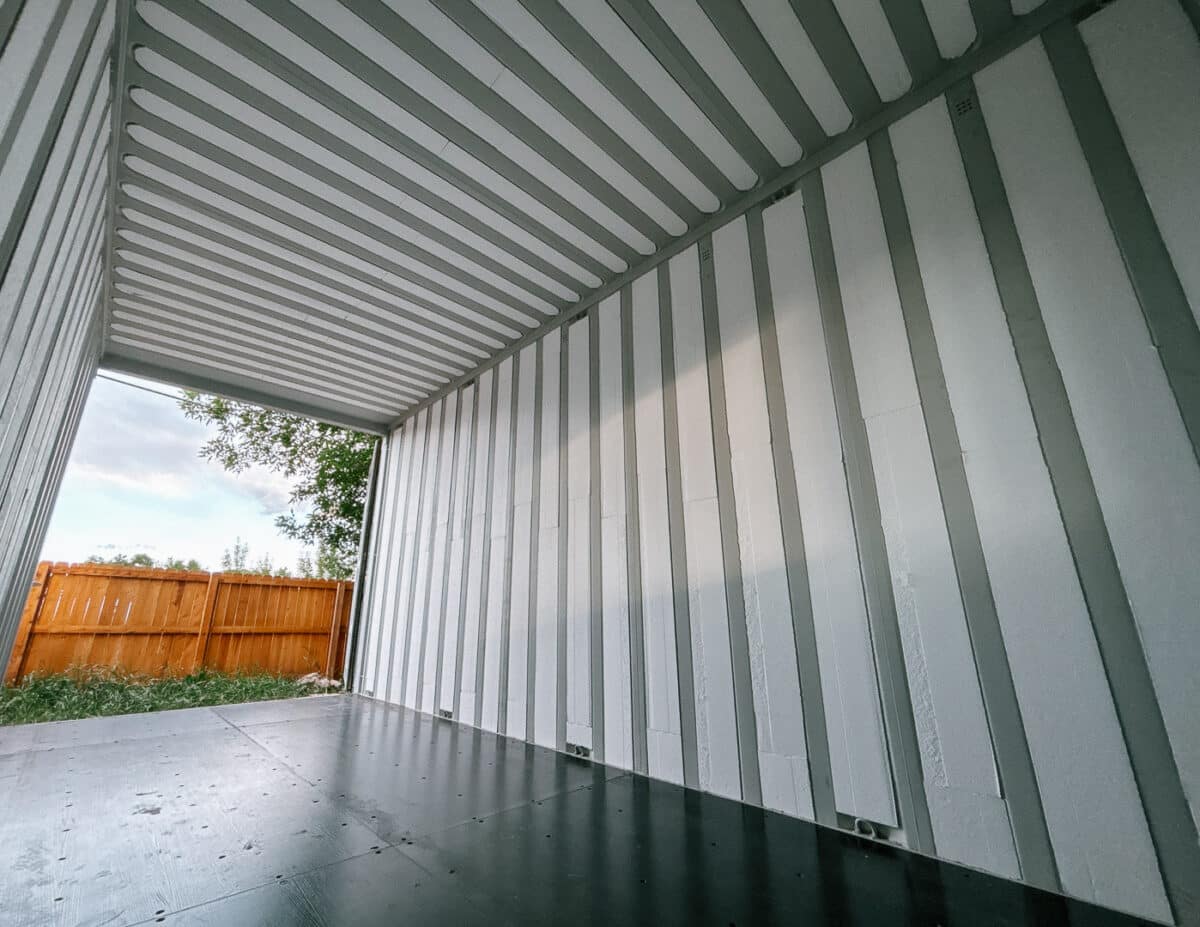
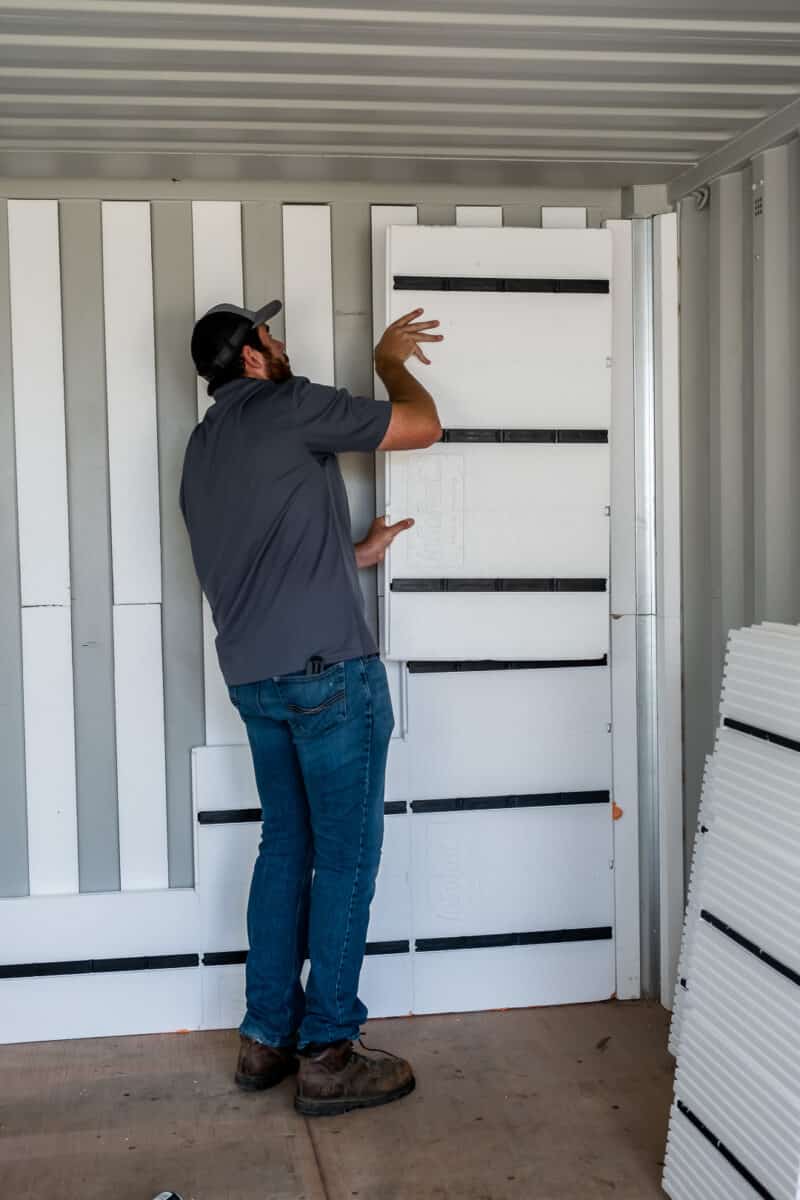
The third approach is a purpose-built solution for container conversions: integrated continuous insulation panels such as those from InSoFast. Unlike traditional systems which separate insulation, framing, and utility chases, InSoFast panels combine them into a single modular wall system.
Install Process:
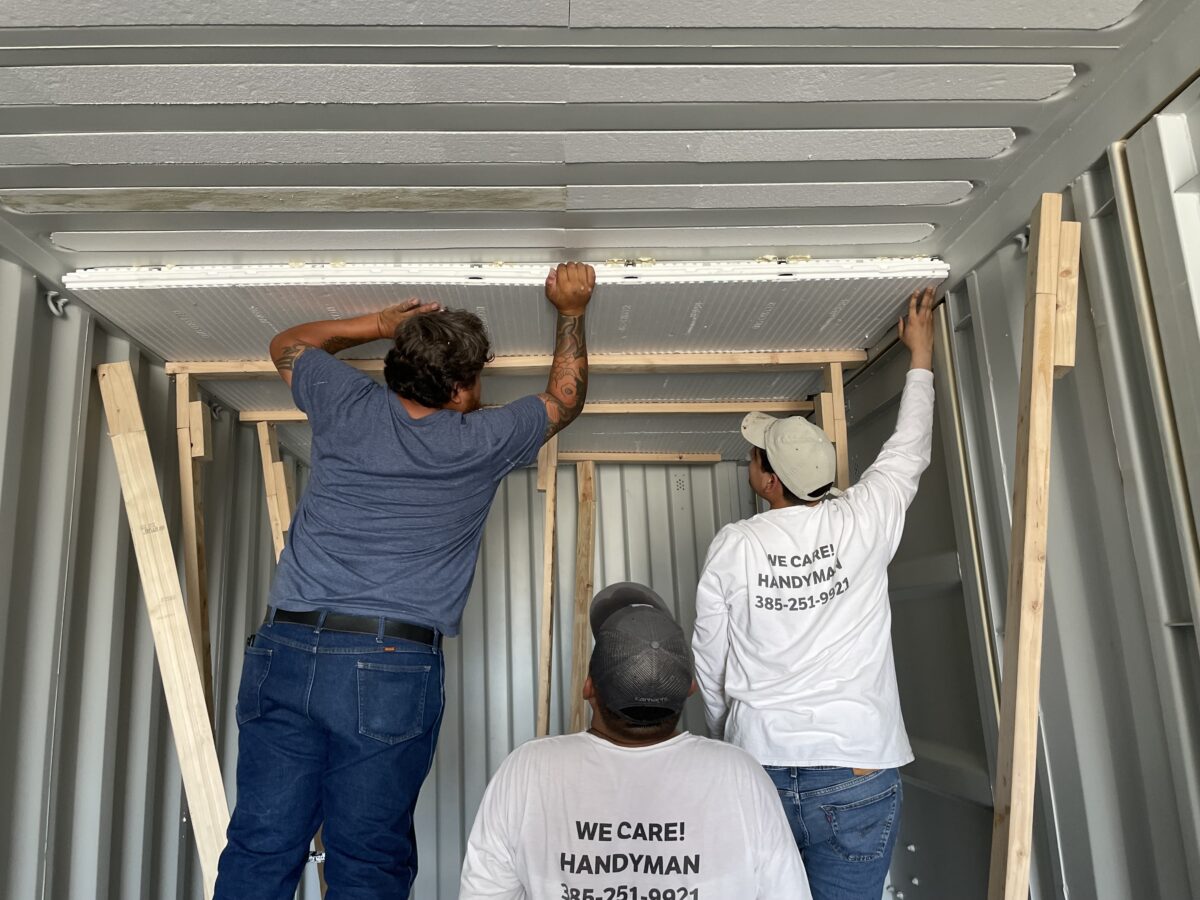
- Attach panels directly to container walls
- Interlock modular system
- Run wiring through built-in channels
- Attach drywall directly to panels
Key advantages:
- Continuous EPS insulation reduces thermal bridging
- Integrated furring structure eliminates full stud framing
- Built-in channels for wiring and utilities
- Direct attachment surface for interior finishes
- Preserves interior square footage
Because shipping containers are steel structures with high thermal conductivity, eliminating thermal bridges is critical. Continuous insulation helps stabilize interior temperatures and reduce condensation risk on steel surfaces. In high-value applications—such as residential conversions, offices, or classrooms—this system supports both performance and long-term adaptability.
Why it stands out:
Rather than adapting a traditional framing method to a steel box, InSoFast is designed specifically to work with the container’s geometry and thermal behavior, not against it.
X-Bracket System for Closed-Cell Spray Foam (Hybrid Performance Upgrade)
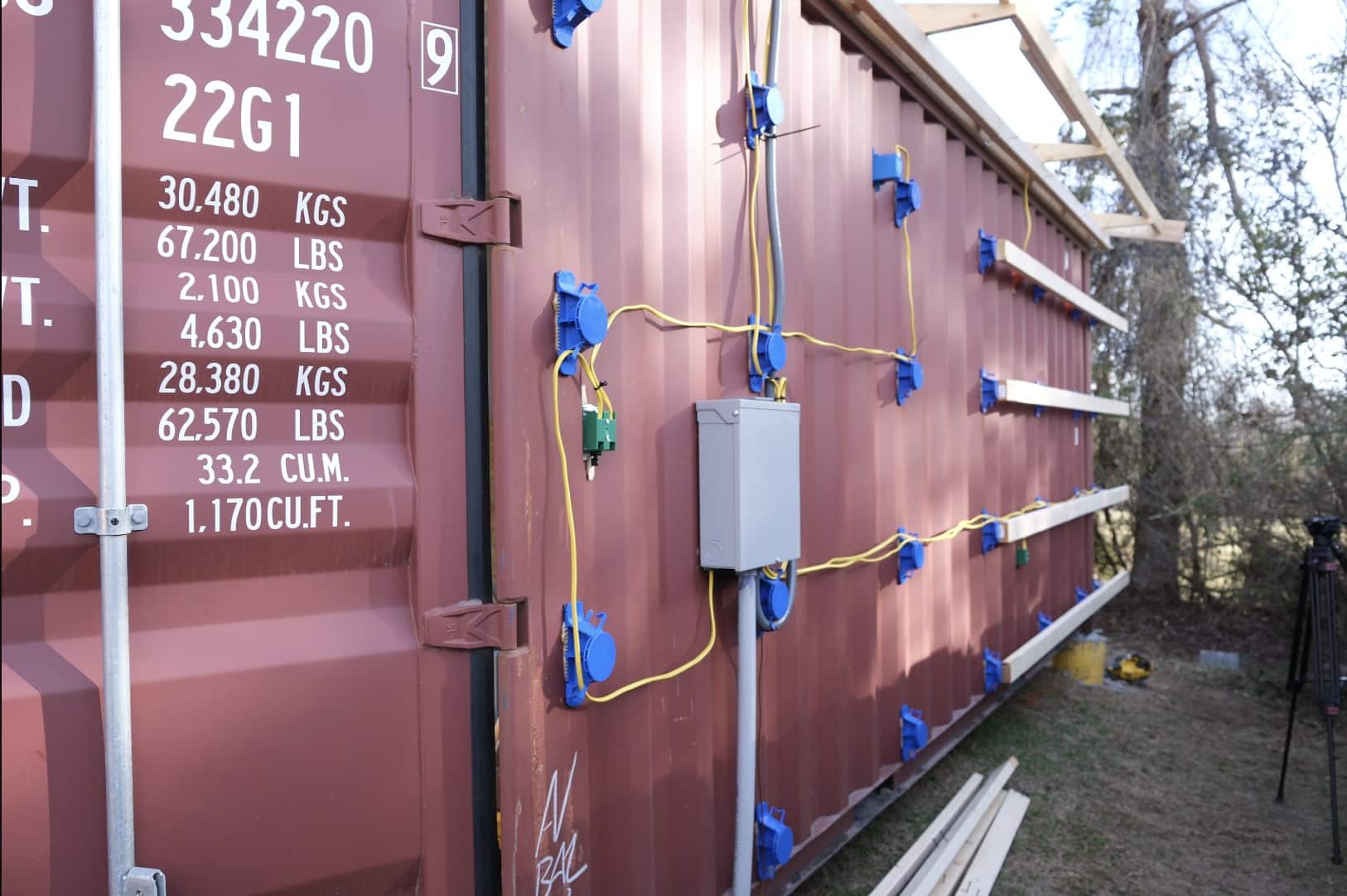
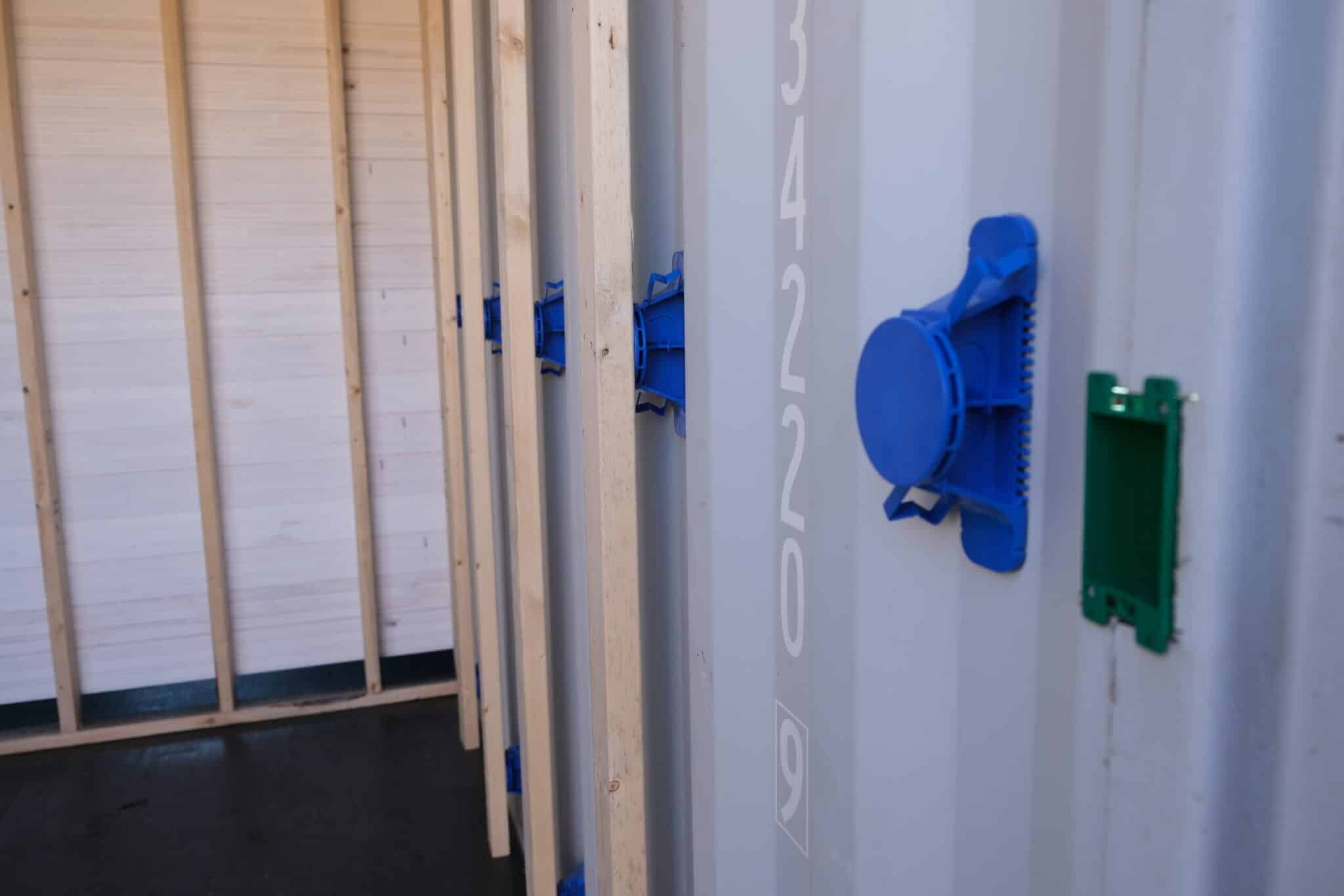
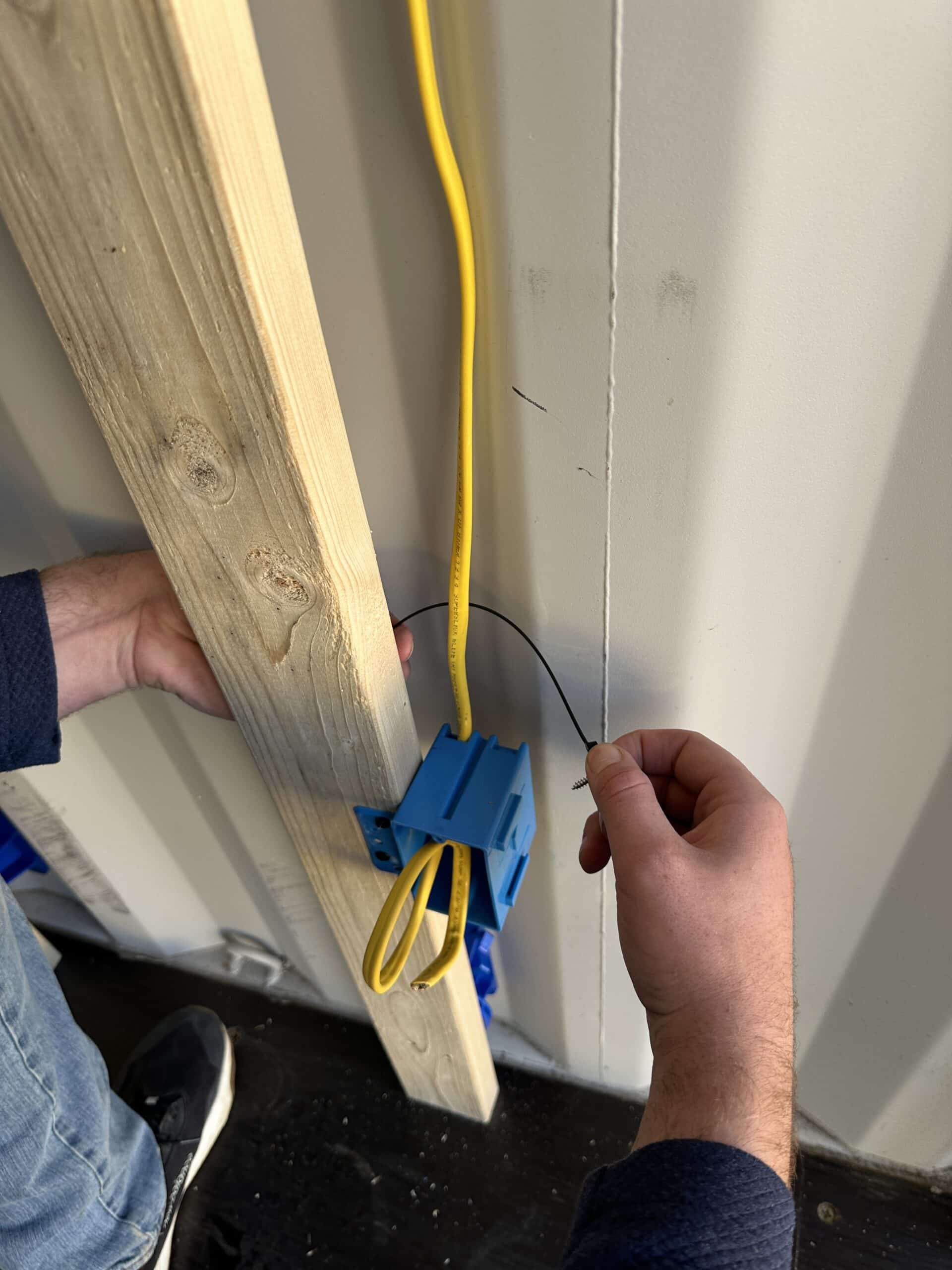
A newer hybrid approach combines spray foam insulation with a structural support system such as the InSoFast X-Bracket System. This system is designed to improve how spray foam is installed and finished inside container environments by providing a more controlled framework for insulation application and interior attachment.
Installation Process:
- Surface Preparation
- Layout & Planning
- Install InSoFast X-Bracket System
- Pre-Run Electrical (Optional but Recommended)
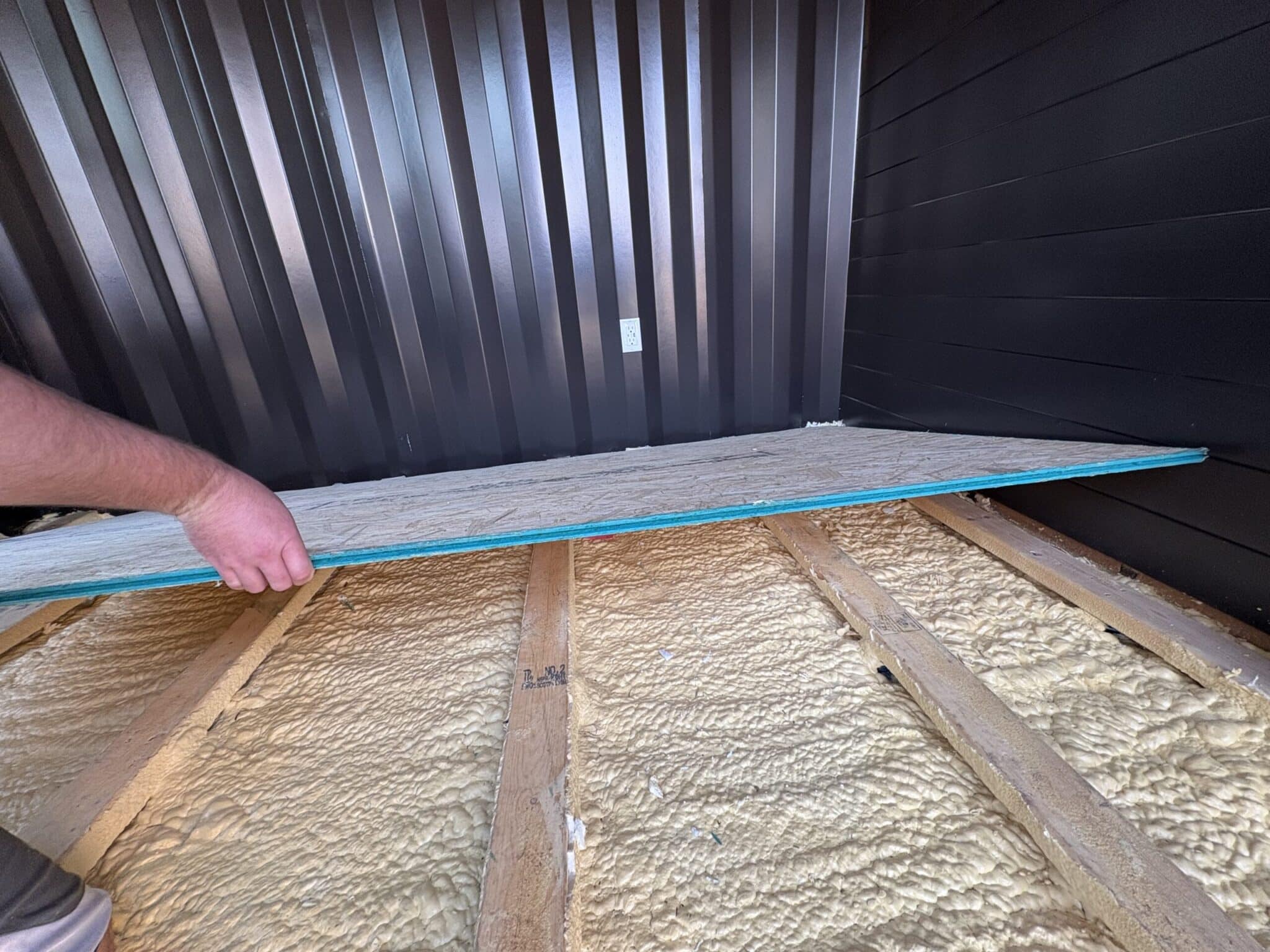
- Apply Closed-Cell Spray Foam
- Trim & Finish Surface
- Interior Finish Installation
Why it’s used:
- Helps define consistent depth for spray foam application
- Provides attachment points for interior finishes
- Supports more uniform wall assemblies in corrugated steel containers
- Can improve build consistency compared to free-spray applications
How it differs from standard spray foam:
While spray foam alone relies entirely on adhesion and application skill, the X-Bracket approach introduces a structured system to help guide installation and finishing layers.
Key considerations:
- Still relies on spray foam as the primary insulation
- Less flexible than modular panel systems once installed
- Performance depends heavily on installation quality of foam
- Typically used in contractor-driven builds rather than DIY projects
This hybrid method attempts to bridge the gap between free-applied spray foam and structured panel systems, but it does not eliminate many of the lifecycle limitations associated with foam-only assemblies.
Comparing the Five Approaches
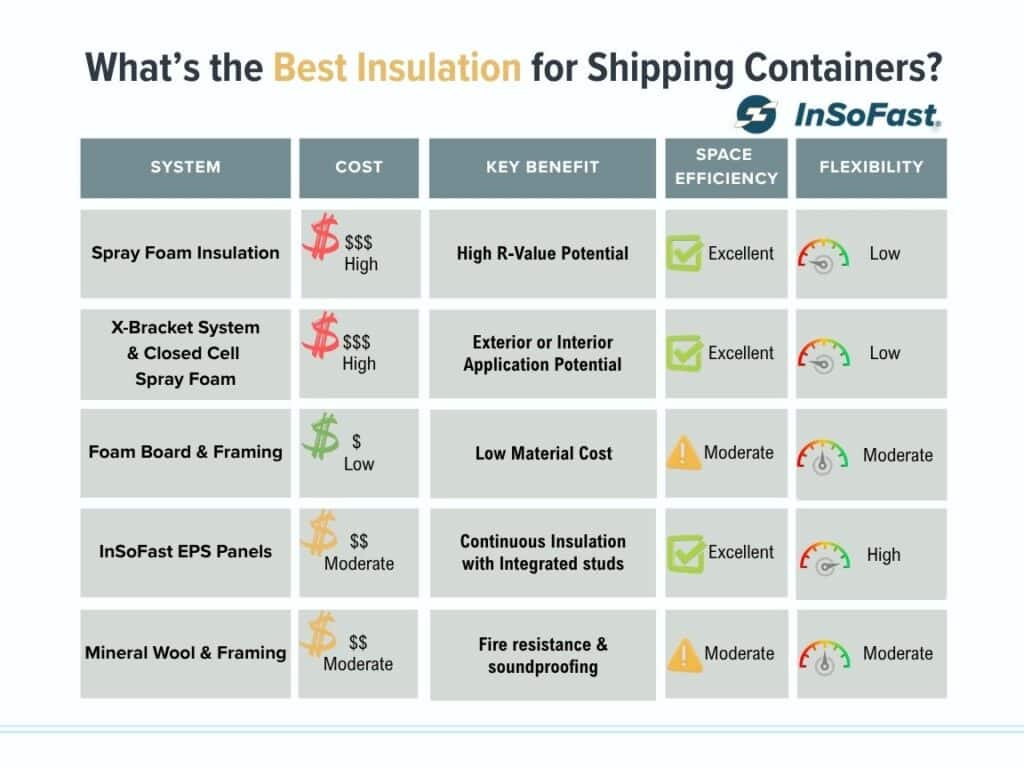
When evaluating insulation systems for shipping container conversions, the differences become clear when viewed through real-world performance needs:
Thermal Performance & Condensation Control
- Spray foam: High initial performance, foam-dependent long term
- Framed systems: Moderate, thermal bridging remains
- InSoFast panels: High, continuous insulation reduces bridging
- X-Bracket + spray foam: High initial, installation-dependent consistency
Interior Space Efficiency
- Spray foam: Excellent
- Framed systems: Reduced due to stud walls
- InSoFast panels: Excellent (minimal space loss)
- X-Bracket system: Good, but depends on foam thickness
Flexibility for Future Changes
- Spray foam: Low
- Framed systems: Moderate
- InSoFast panels: High (accessible channels and modularity)
- X-Bracket system: Low to moderate
Installation Approach
- Spray foam: Contractor-dependent
- Framed systems: Labor-intensive
- InSoFast panels: Modular, fast installation
- X-Bracket system: Contractor + foam specialist required
Why “Accepted” Doesn’t Always Mean “Optimal”
In shipping container construction, the most commonly used insulation methods are not always the best suited to the application—they are simply the most familiar. Spray foam is widely used because it is fast and proven. Framing systems persist because they align with traditional construction practices. Hybrid systems like X-Bracket evolve to improve existing methods without fully rethinking the problem.
But container structures are fundamentally different from wood-framed buildings. They demand insulation systems that address:
- Continuous thermal bridging in steel
- Limited interior space
- Moisture and condensation control
- Long-term adaptability of use
This is where continuous insulation systems like InSoFast differentiate themselves—not by adapting old methods, but by rethinking the assembly entirely.
On paper, foam board looks cheapest—and spray foam looks most expensive.
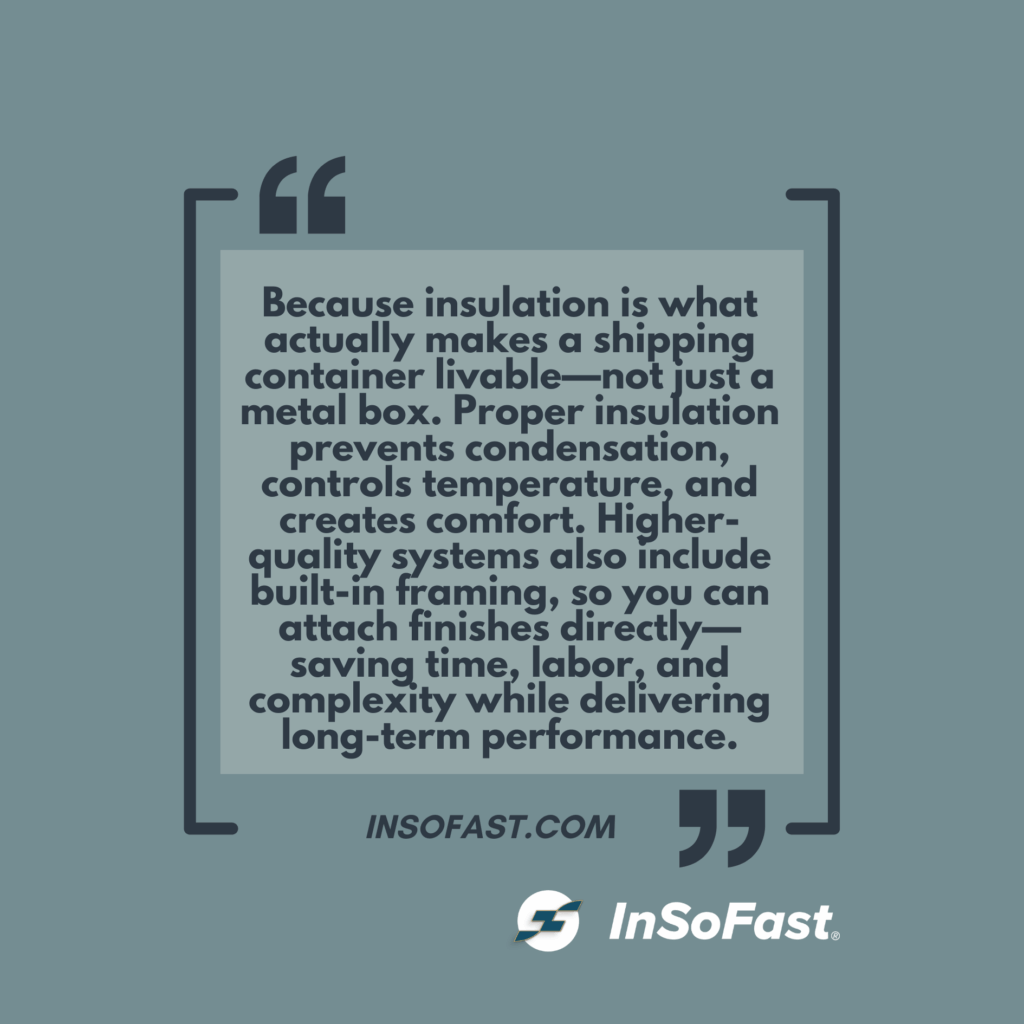
But in container construction, you’re not just buying insulation—you’re buying a wall system.
The Real Cost Isn’t Just Price Per Square Foot
The biggest mistake in container insulation decisions is focusing only on upfront cost.
What impacts total project value:
Interior Space Loss
- Framing can reduce usable width by 4”–8” total
- Critical in small containers
Labor Time
- Framing + foam board = most labor-intensive
- InSoFast Panels = faster installs, DIY friendly
Future Flexibility
- Spray foam = difficult to modify
- InSoFast = accessible + adaptable
Thermal Performance
- Continuous insulation (InSoFast) reduces long-term energy costs
- Framing introduces performance loss through thermal bridging
While foam board may appear cheapest and spray foam delivers high performance, continuous insulation systems like InSoFast often provide the best total cost per square foot when labor, thermal efficiency, and long-term flexibility are considered.

Continuous Insulation Solutions
For 20 years, we have been an innovator in the insulation industry, with engineered solutions to save time and money. We pride ourselves on excellent customer service and quality products 100% made in the USA. InSoFast strives to change the way homes are built, making them more comfortable, energy efficient and healthier. For more information, visit our website at www.InSoFast.com