
How to Prevent Mold in Basements
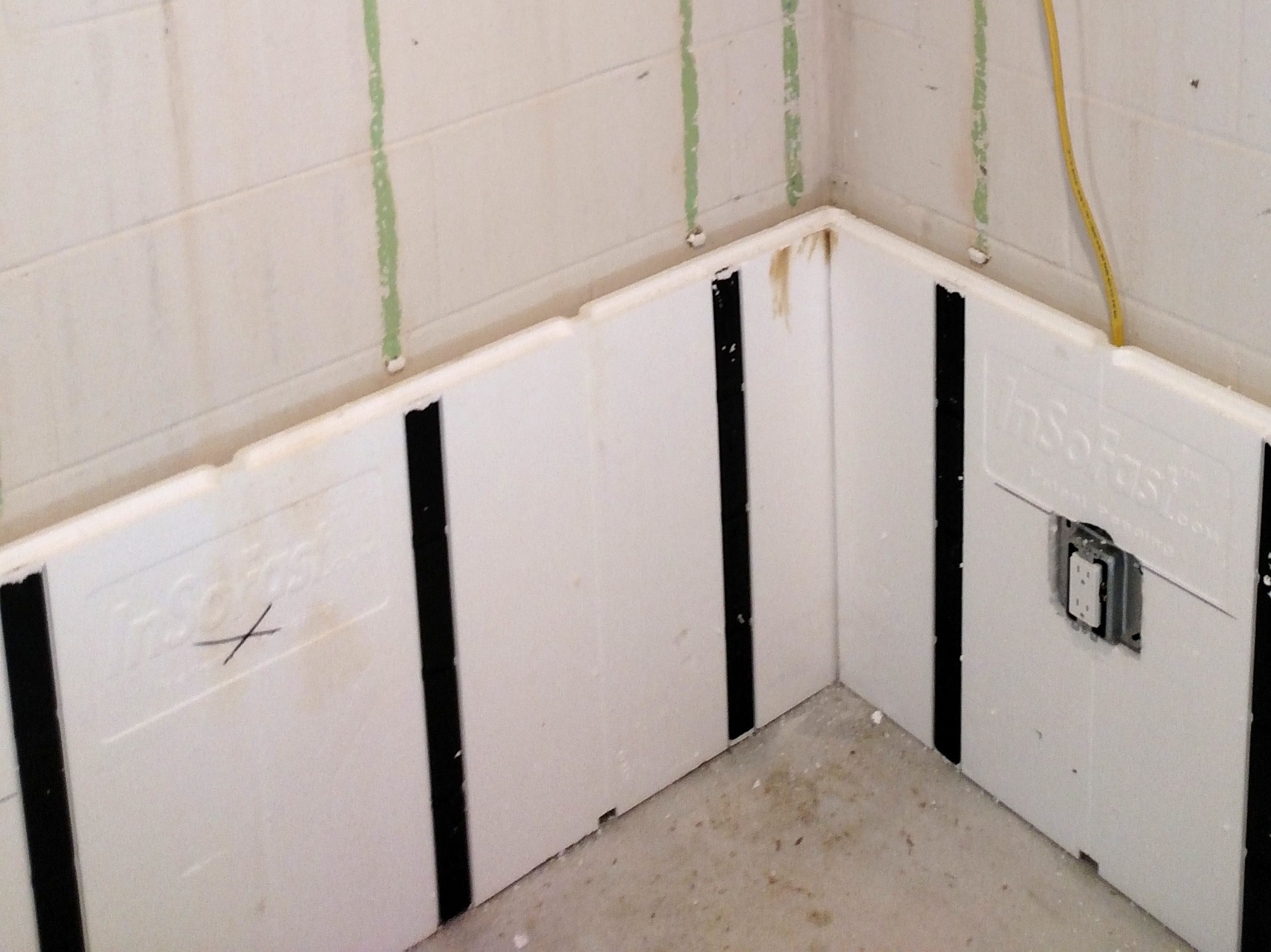
InSoFast panels are designed to manage moisture. When installed on a cold concrete basement wall, the closed-cell EPS body creates a thermal barrier that inhibits the humidifying conditions that lead to mold growth.
Additionally, each panel is equipped with a capillary break and gravity drainage channels. These channels are specifically-sized cavities that moderate vapor pressure so that a wall assembly’s moisture content is continuously controlled or drained if needed.
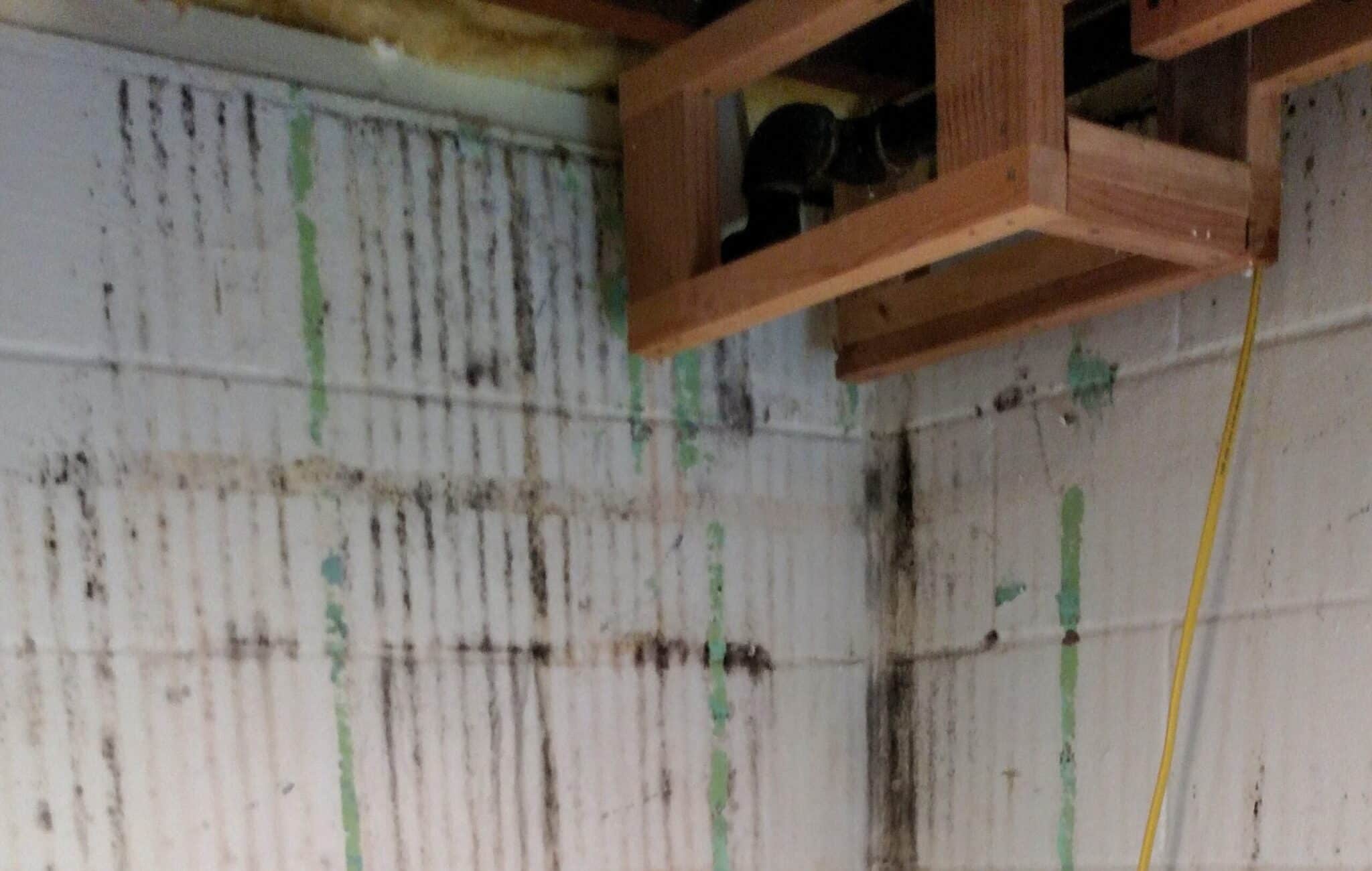
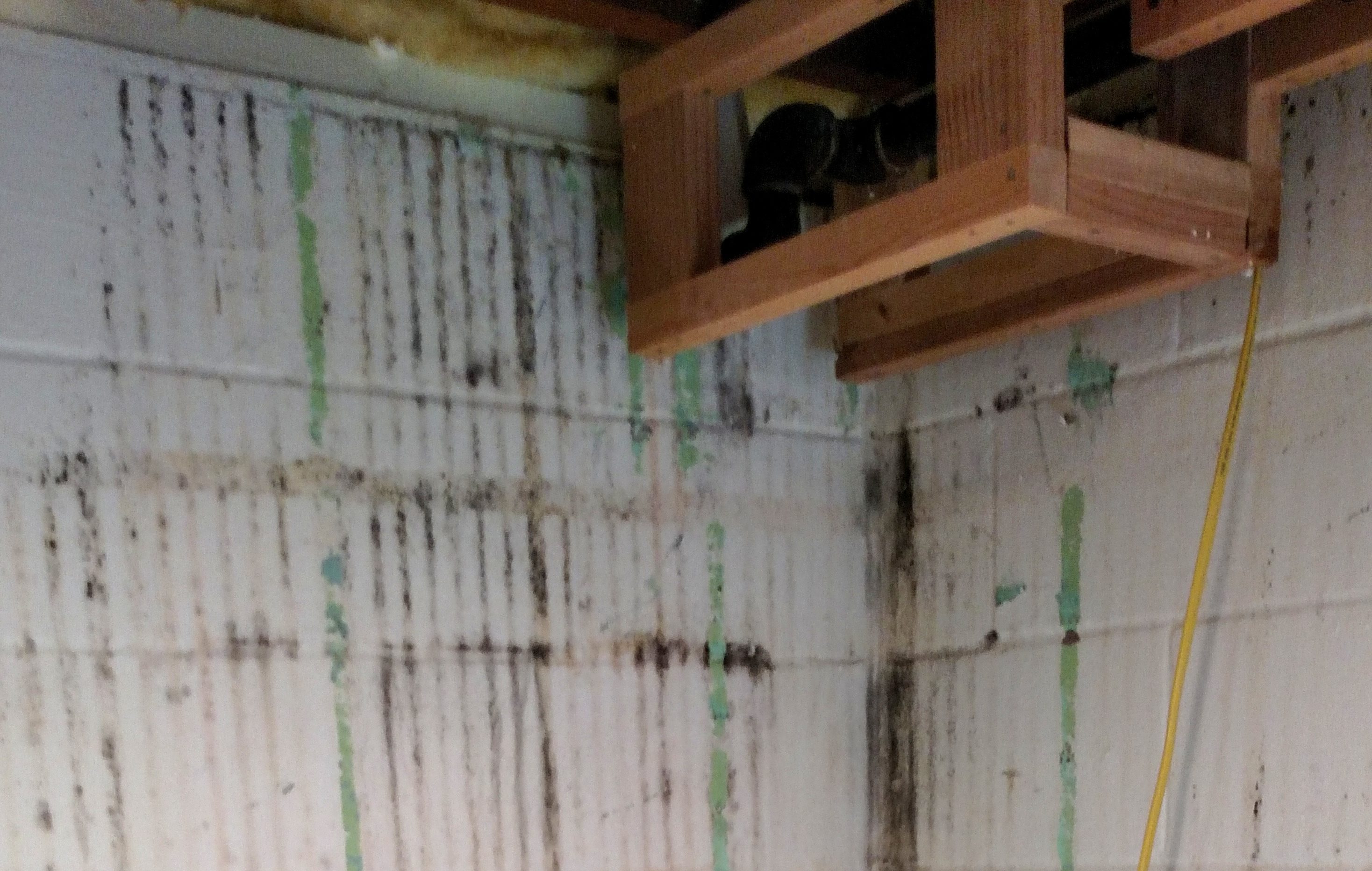
Simply put, our panels are designed to control mold and moisture issues, which is why one customer had reason to panic when he found mold growing behind them in his unfinished project.

At first glance, Kevin’s photos appear contrary to the strategic, moisture-fighting design of InSoFast panels, but in reality he made a few errors in the process of his installation.
We spoke with Dean of InSoFast about the failures of Kevin’s project and how to avoid this scenario with a few simple steps.
How and why did this happen to Kevin’s basement?
Back in 2014, Kevin placed an order of UX 2.0 panels to insulate his basement. The busyness of life made his renovation a slow moving side project and over the course of two years Kevin tapped away at his project wall by wall. The key to his problems were these half-complete walls and a seemingly harmless step he took to save time.
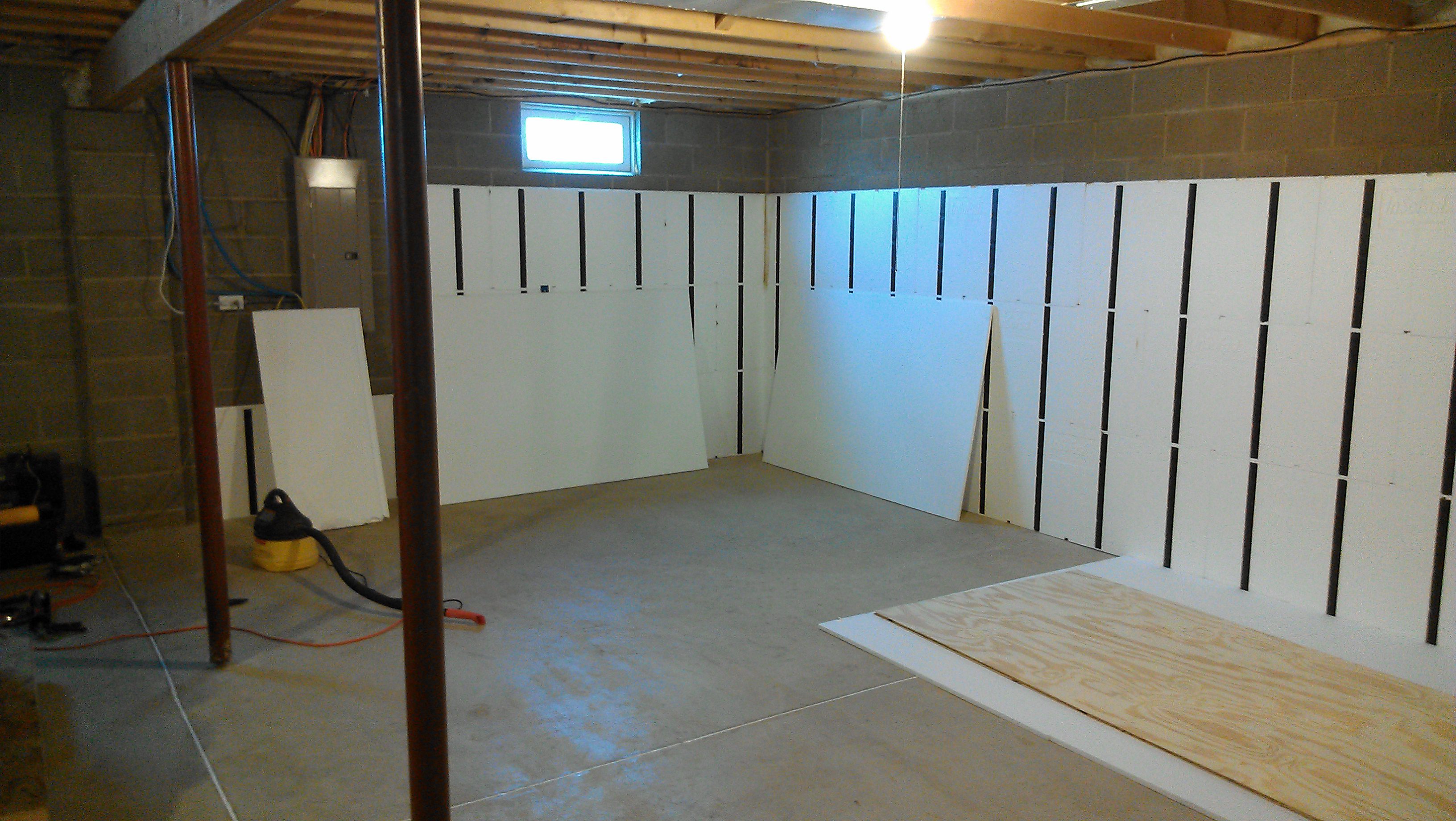
He didn’t finish the top part of the walls with InSoFast, thinking it would make the wiring process easier in later steps. However, the unchecked openness created a space susceptible to dust accumulation and temperature change.
At the top of the wall, the cold concrete created a condensation point for moisture in the humid basement air. The condensed moisture was able to drain behind the InSoFast panels. With dust, moisture and the right temperature, the conditions were ripe for mold growth.
Can Kevin do anything to remediate the problem?
Kevin went overboard when he noticed the mold growing. He tore off the first layer and noticed more mold. Pretty soon he tore off the entire wall, an expensive move! Kevin called InSoFast about the problem after there was nothing left to salvage, but if he had called earlier we would have said, “Don’t panic!”
Instead of ripping out the panels he could have cleaned up as much mold as possible with trisodium phosphate, a non-soap type of cleaner or another cleaner designed to inhibit mold. From there, he could have sealed it up, added drywall which is an additional air barrier, and finished the wall thus closing the environmental loop.
Could he really have destroyed all of the mold behind the panels?
He could have destroyed most of it, and eventually, the remaining mold would have burned itself out. It would have eaten up all the dust and pollen available and be forced into dormancy.
Consider putting a piece of white bread in a sealed plastic bag and placing it in a dark closet. That bread will eventually turn moldy and gross. However, this mold doesn’t have the ability to affect anything outside of the sealed plastic bag. Once it finishes the food source, its time is up.
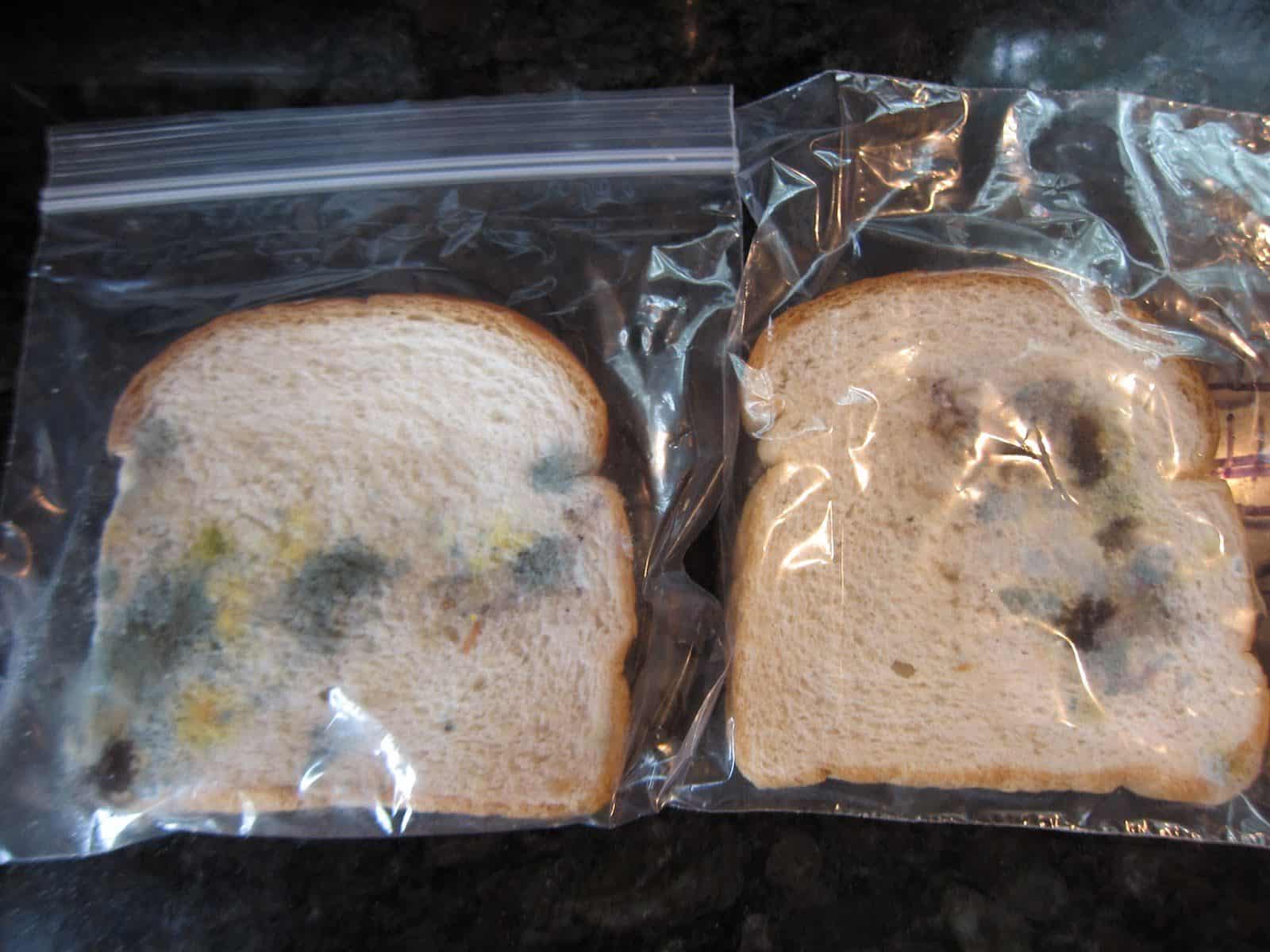
But what if a hole forms in the plastic bag?
That’s a great question. The mold spores are going to get out of the plastic bag. They will get into the environment and look for a place to colonize.
A piece of white bread is the perfect food source and the bag satisfies the mold’s living conditions, but once it gets outside of that perfect environment there’s not much left for it to survive on. Unless the mold is lucky enough to find another moist, temperate area with lots of food it won’t cause any problems. The same goes for a small hole in the InSoFast panel.
A small hole in one of our panels will not open up a superhighway for mold to flourish because you’ve changed the interior space to prevent its ideal conditions.
So technically mold can grow on anything if the conditions are right. What’s the best way to prep your walls to avoid a moldy situation?
You need to make sure you eliminate conditions that lead to mold growth.
If you have a damp basement, it must be fixed before InSoFast is installed. We have resources on our website and the US government has resources on how to remediate moisture.
90% of all moisture problems come from landscaping. A house is really just a boat floating on a wet sea of mud. You don’t want to poke holes in your “boat.” Instead, you want to seal it with something that is pretty much waterproof.
If you need to clean the walls, get a trisodium phosphate. It’s a cleaning agent that does not have any surfactants or soap. Soap makes water “wetter.” If you put soap on a concrete block wall you actually open up the capillarity of the material which creates a highway for water to travel into your home.
The smoother the surface the harder it is for dust to collect. Drylok, a waterproofing product, can help in this situation. It makes the wall smooth and slick and plays well with adhered InSoFast. If you cover the wall with InSoFast quickly after cleaning it there will be very few mold spores, dust or pollen present, if any.
Is this a common problem for InSoFast customers?
No, but we did have one other unique condition from a guy in Ohio. It was the dead of winter and he was putting InSoFast on the floor and the walls. He planned everything out and was amazed at how fast the project was moving. He wanted to build a very hypoallergenic space because his wife and child have asthma.
One night, as he was putting the last panels on the top part of the wall, he ran out of glue and stopped. It was super cold night outside, but it was warm and humid on the inside. It was especially warm and humid in his basement because he was running a humidifier with the return vents closed.
This caused a spike in the basement’s humidity level. As it rose, a solid layer of ice started to form where the panels were left unfinished. In the rim joists just above, the fiberglass froze solid. It was as if that uninsulated strip was one giant hole exposed to the outside temperature.
This hadn’t happened before because the entire basement used to get cold with the nighttime temperatures, but with the InSoFast and high humidity he had changed the environment. The humidity had to go somewhere, so it went to the cold concrete which acted like the perfect dehumidifier. It condensed the humid air and froze the resulting water.
Instead of panicking like Kevin he called us first thing in the morning and sent pictures. After taking some of the stacked InSoFast down he lowered the humidity by opening up the HVAC returns in the basement. It warmed up outside, the ice melted and he sealed everything out. He also removed the fiberglass in the rim joist and replaced it with foam plastic. Those perfect conditions no longer exist, so it hasn’t happened since. The basement is properly sealed.
How do the InSoFast’s moisture control channels function in this situation? Are they not a cavity that aids the potential for mold growth?
The InSoFast moisture control channels are largely precautionary in a basement installation because the goal should always be to eliminate any and all moisture problems long before they make it to the wall. When the situation is appropriate the moisture channels can be tied into perimeter drainage systems, but more often they simply serve to prevent walls from trapping liquid moisture, which can damage walls and affect R-Value, by giving it space to vaporize.
Customers often incorrectly think this means the InSoFast channels are “ventilation channels” that will pump out moist air from the concrete walls, but it won’t really work this way. The channels are designed small enough that the pressure required to draw air through them will likely be greater than any convective loop, or temperature differences, that would exist in a fully finished basement. Regardless, it’s always considered best practice to seal off the channels from the interior living spaces in order to best avoid convective scenarios.
It’s possible to create this kind of seal with other forms of rigid insulation, but the engineering of the InSoFast panel makes it a much simpler process. The closed-loop system gets help from the continuous interlock and embedded, inorganic framing of the panels. These features work in combination to eliminate a convective loop that transports air and moisture to potential mold spores. They also don’t qualify as a food source for mold, unlike damp wood framing, should something go wrong. In fact, even if the moisture control channels completely filled up with dust, a 20 foot long wall would still have less than one 2×4’s food value.
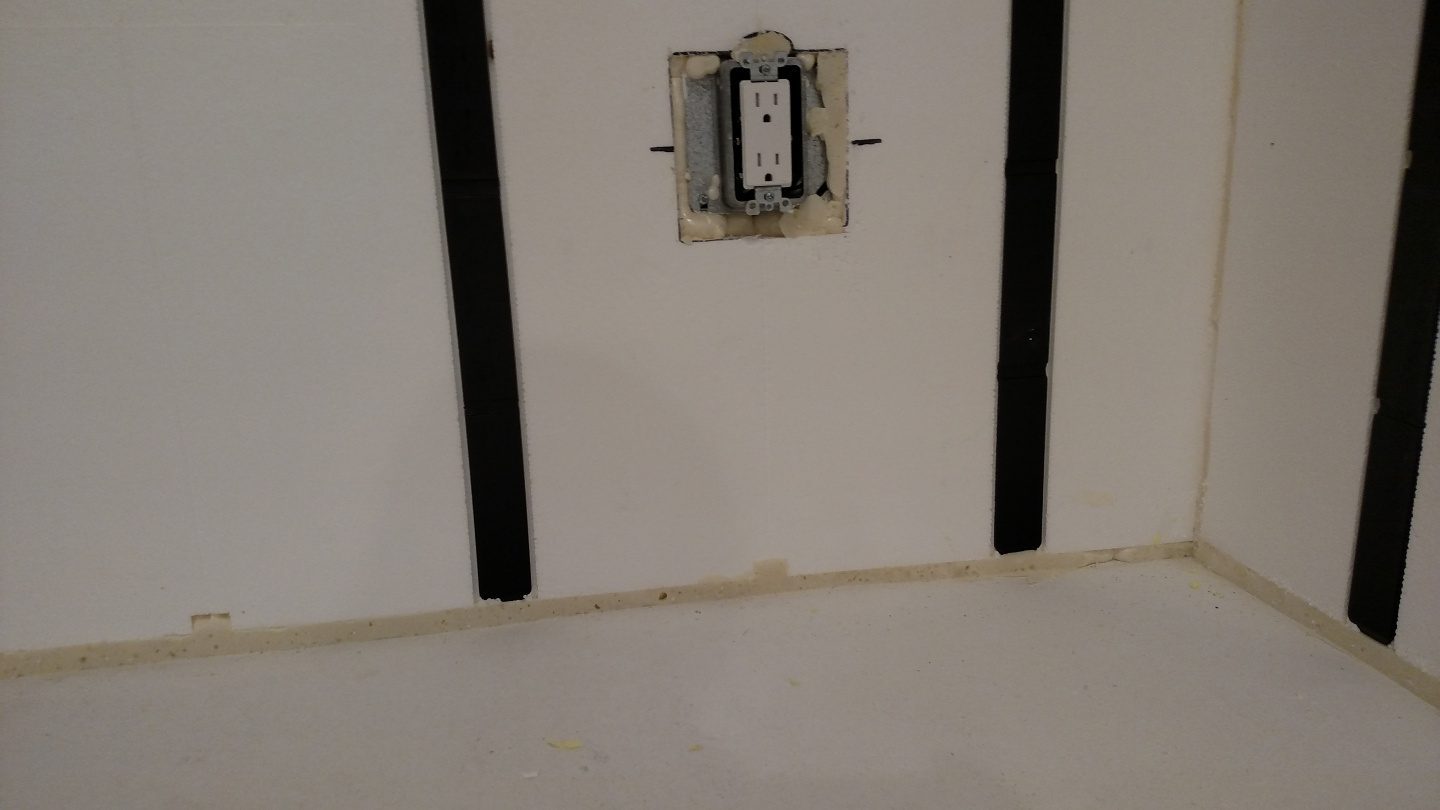
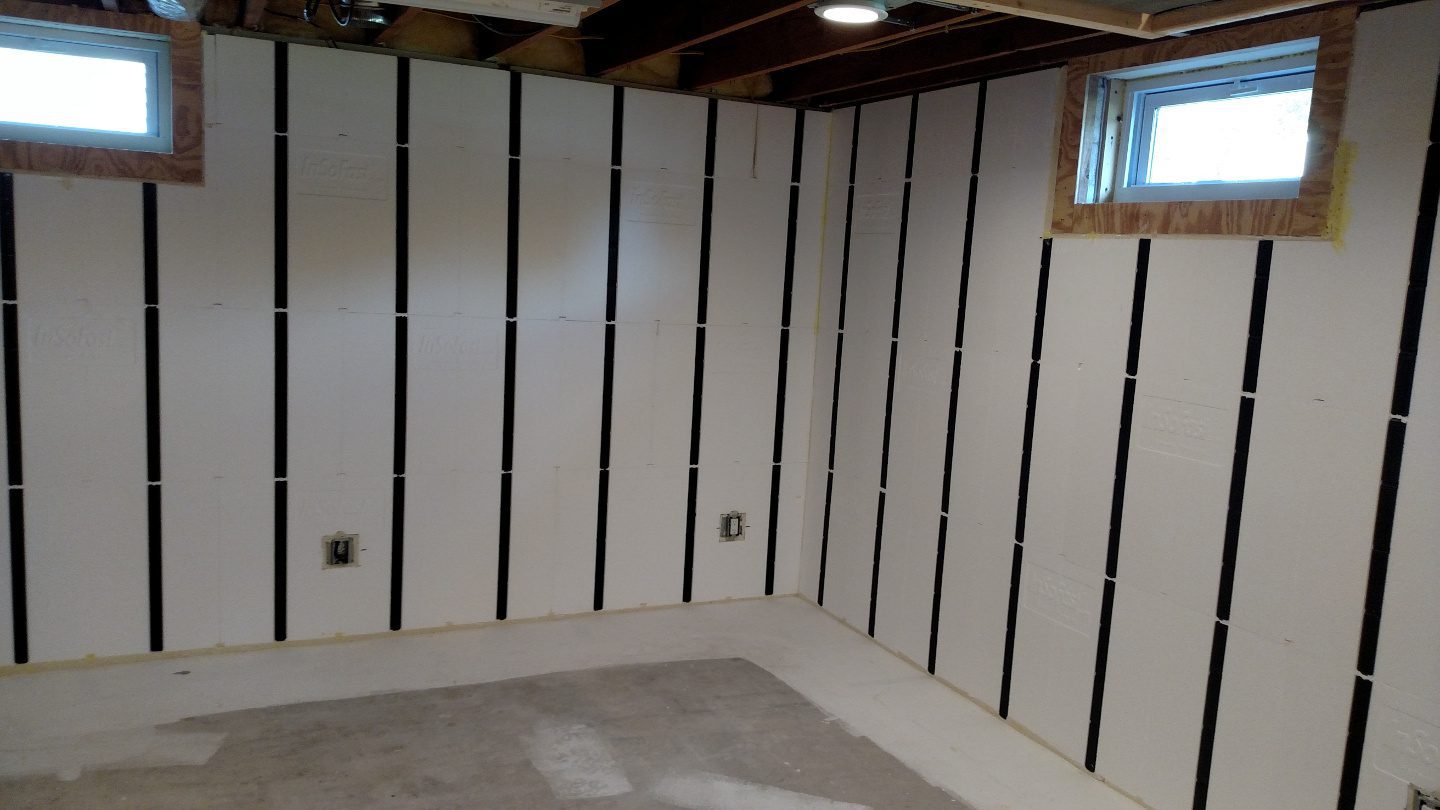
Kevin ended up reordering InSoFast. His basement is sealed up and mold-free. He’s very happy with the results.
If you are unsure about your installation always feel free to call our technical department. We are here to help and in most situations there is an easy fix! We can and will help you choose the best course of action.
Additionally, subscribe to our Youtube channel to stay up to date with our new video series #AskInSoFast. Dean answers InSoFast questions with live demos and discussions. To submit a question in our next episode, ask away on Facebook, Twitter or in the comment section below.
