Article Summary
In basement and below-grade assemblies, soil gases like radon often exploit air-leakage pathways, pressure differentials and unsealed foundations to infiltrate living spaces. The InSoFast X-Bracket System combined with closed-cell spray polyurethane foam (ccSPF) addresses these concerns by delivering a monolithic air/soil-gas/vapour barrier from slab to wall. The X-Bracket mechanically isolates interior finish attachments while permitting a continuous foam layer to bond directly to concrete, eliminating conventional framing cavities that typically form radon entry routes.
Key building-science benefits include:
-
Crack & joint sealing: The foam fills irregular surfaces and voids often missed by sheet membranes or simple tape.
-
Integration with sub-slab systems: By minimizing re-entrainment and leakage pathways, the system enhances performance of passive/active radon fans.
-
Thermal/moisture/soil-gas control: A unified approach means fewer layers, reduced pressure differentials and improved indoor air quality in basements prone to gas infiltration.
Mitigate Radon in Basements with the
X-Bracket System and Closed Cell Spray Foam
Radon mitigation is a critical concern in modern construction and retrofitting projects, especially as awareness grows about the impact of radioactive gas on indoor air quality and health. As building science professionals, we understand effective radon mitigation must be integrated seamlessly into a building’s envelope and mechanical systems. InSoFast’s innovative X-Bracket System, when paired with closed cell spray foam, presents a compelling solution for addressing radon entry in basements. This system not only improves insulation and moisture control but can also enhance the efficacy of passive and active radon mitigation strategies.
Understanding Radon and Its Pathways
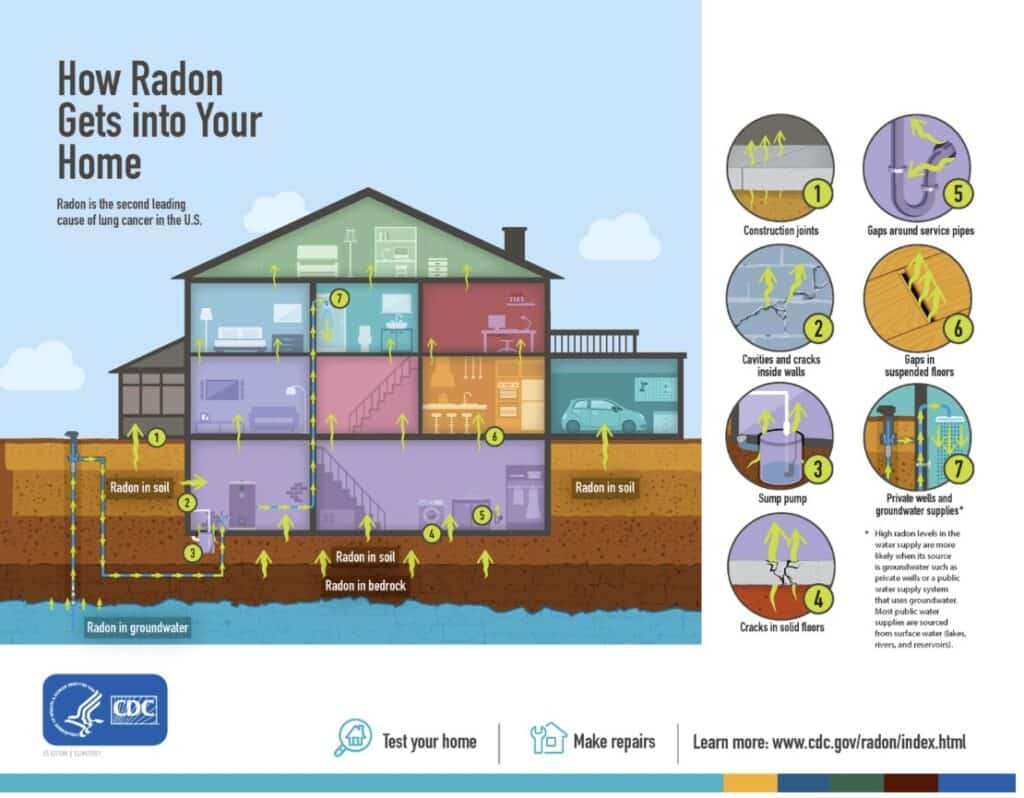
Radon is a naturally occurring radioactive gas which emanates from soil and rock as uranium decays. In homes with basements or slab-on-grade foundations, radon can infiltrate through cracks, joints, utility penetrations, and porous materials. The pressure differential between indoor and outdoor air often drives radon into the building envelope, particularly in basements where negative pressure zones are common.
Traditional mitigation involves soil depressurization and sealing of entry points. However, sealing efforts are often challenged by inaccessible cracks or inadequate sealing materials. This is where InSoFast’s new X-Bracket System combined with closed cell spray foam introduces a game-changing building envelope solution.

What Is the InSoFast X-Bracket System?
The X-Bracket System is an engineered attachment system designed by InSoFast for secure integration of interior finishing assemblies in below-grade spaces. It provides a robust framework for affixing drywall or other interior finishes without compromising the continuity of insulation or vapor barriers. The X-Bracket system can be installed on basement walls and floors, using high strength construction adhesive to attach the brackets to concrete. Using the X-Bracket System on the floor and the walls allows seamless installation of closed-cell spray foam to create a continuous barrier to radon.
Closed Cell Spray Foam: A Radon-Resistant Barrier
Closed cell spray polyurethane foam (ccSPF) offers several attributes which are highly effective against radon infiltration:
- Air Sealing: ccSPF provides a monolithic, airtight seal to fill gaps, cracks, and penetrations more thoroughly than caulks or tapes.
- Vapor Retarder: It has a low perm rating limits vapor diffusion, which is essential in controlling moisture movement and mold risks in basements.
- Structural Rigidity: It adds structural integrity to walls and is compatible with mechanical systems like the X-Bracket.
- Adherence to Substrate: It bonds strongly to concrete, masonry, and polystyrene, creating a seamless barrier across varying materials.
When applied over or around the X-Bracket System, closed cell spray foam creates a continuous radon-resistant layer to minimize potential leakage paths into the living space. Studies show that 1.25” of closed cell spray foam is 9 times more effective at eliminating radon than a 6 mil polyethylene vapor barrier and is much more puncture resistant.

Radon Mitigation Through Assembly Integration
Radon enters homes through:
- Cracks in slabs and foundation walls
- Cold joints between floor and wall
- Openings around utility penetrations
- Capillary paths through porous materials
The pairing of InSoFast’s X-Bracket and closed cell spray foam enhances radon mitigation by targeting the key vectors of radon infiltration:
- Crack and Joint Sealing: Traditional radon mitigation relies on identifying and sealing all cracks—a labor-intensive and often imperfect process. The X-Bracket System and spray foam combination encapsulates irregular surfaces, bypassing the need for pinpoint sealing.
- Sub-Slab Depressurization Compatibility: In retrofits or new construction, where a sub-slab depressurization system is used, the improved air barrier from the X-Bracket and spray foam system minimizes indoor radon concentration by preventing re-entrainment of gas from adjacent soil pockets or wall cavities.
- Utility Penetrations: The X-Bracket allows for secure installation of MEP systems without puncturing air barriers, and spray foam can be easily applied around penetrations to maintain airtightness.
- Thermal and Moisture Control: Moisture management is crucial because high humidity can interfere with radon behavior. The thermal performance of this assembly reduces condensation and maintains a more stable indoor environment, reducing stack effect-driven pressure differentials which draw radon inside.
Design and Installation Considerations
For building scientists and contractors, several best practices should be observed when deploying the X-Bracket and closed cell spray foam for radon mitigation:
- Substrate Preparation: Ensure the concrete surface is clean and dry before attaching the X-Bracket or applying foam to maximize adhesion.
- Foam Thickness: Use at least 1.25–2 inches of ccSPF to ensure adequate air and vapor barrier properties.
- Integration with Passive Systems: Consider pairing the system with a passive radon stack or rough-in for future fan installation, particularly in high-risk zones.
A Holistic Approach to Healthier Basements
Radon mitigation should not be treated in isolation. It must be part of a holistic building envelope strategy to address air quality, energy performance, and moisture resilience. The InSoFast X-Bracket System, when used with closed cell spray foam, delivers on all these fronts.
This approach provides building professionals with a durable, code-compliant assembly that not only meets radon resistance goals but also contributes to a more energy-efficient, comfortable, and healthy indoor environment.
Conclusion of Mitigating Radon with InSoFast X-Bracket and CCFS
The pairing of InSoFast’s X-Bracket System and closed cell spray foam transforms basement into high-performance assemblies which serve dual roles: superior thermal and moisture control, and radon resistance.
For architects designing healthy, code-compliant homes and builders seeking durable, efficient systems, this approach reduces material complexity while maximizing performance. It integrates well with radon mitigation strategies in both new and retrofit construction, offering homeowners peace of mind—and indoor air worth breathing.
Have questions about an insulation project?
Call our Sales Team at 888-501-7899 to talk more about our solutions or request a quote here.